business
How to Start a Business in Liverpool: A Practical Step-by-Step Guide
Thinking of starting a business in Liverpool? This guide covers the 12 steps that matter — from testing your idea to getting your first paying customer.
Brian10 min read
Is your site losing leads? Discover 7 common issues with Liverpool mobile-friendly websites that most business owners miss on their own phones.
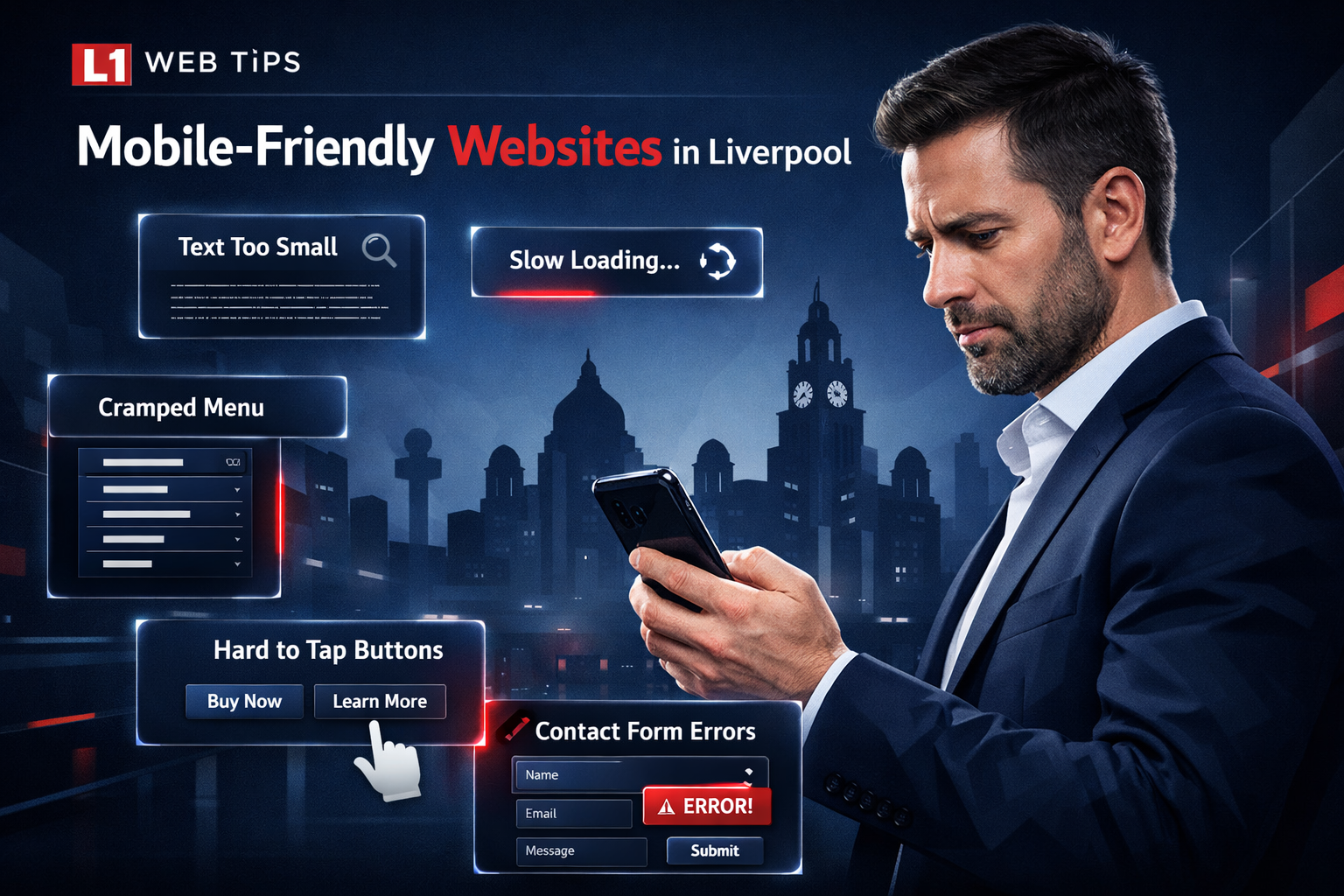
You open your website on your phone. It loads. You scroll a bit. You tap the menu. Nothing looks obviously broken. So that means your mobile experience is fine, yeah?
Not so fast.
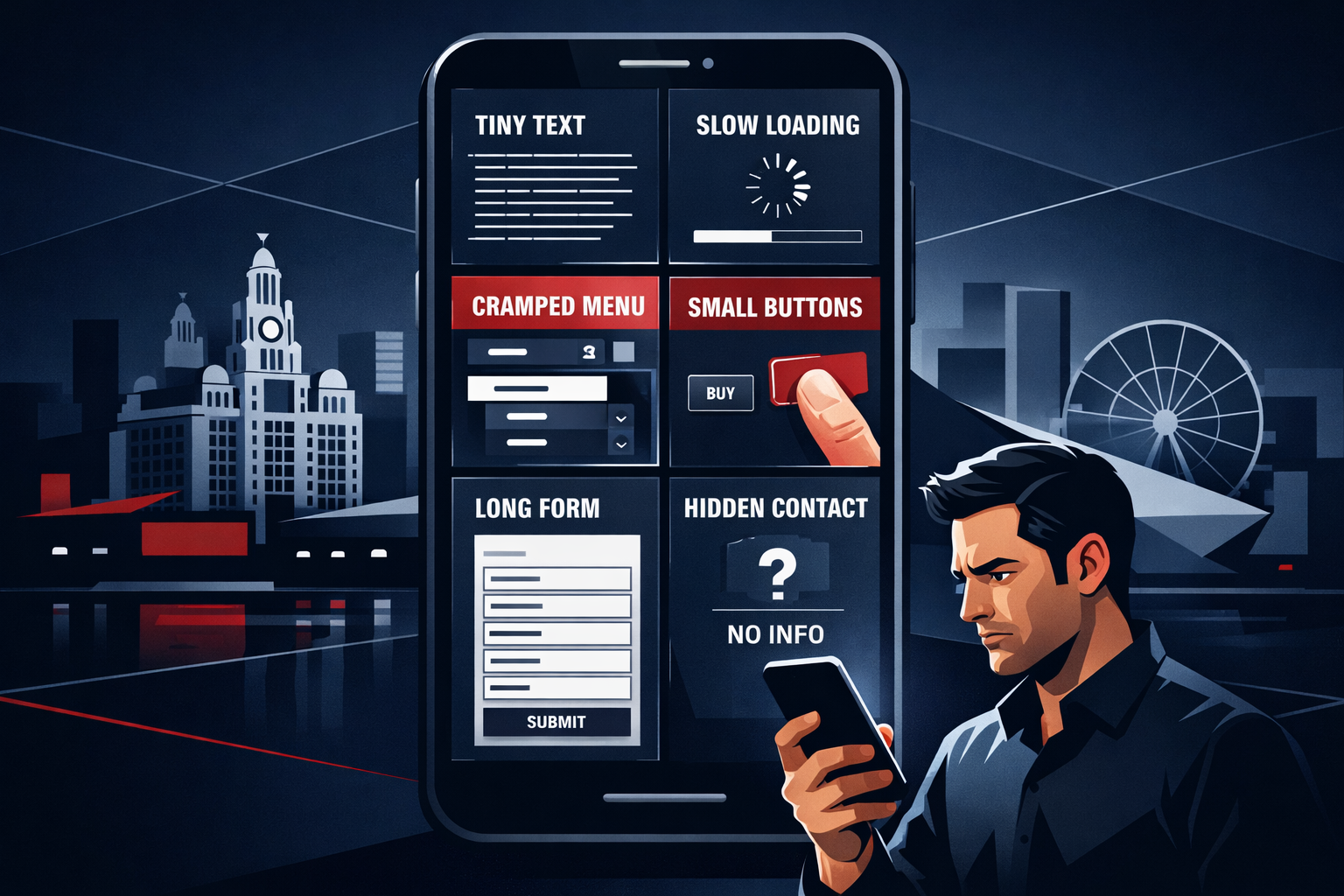
That is one of the biggest mistakes Liverpool business owners make. You test your own website on your own phone, on your own Wi-Fi, already knowing where everything is. Meanwhile, a real customer is trying to use it one-handed on mobile data, half-distracted, possibly on a train, walking through town, or quickly comparing you with two or three other local businesses before deciding who gets the call.
That is not the same experience.
A website can look fine on your phone and still quietly lose leads every week.
If you want more enquiries, more calls, and a better-performing site, you need to stop asking:
“Does it open on mobile?”
…and start asking:
“Is this actually easy for a real customer to use on mobile?”
Here are 7 common mobile-friendly website problems Liverpool business owners often miss on their own phones — and why they matter more than they think.
This is one of the sneakiest mobile problems.
Technically, the text is there. It has not fallen off the page. Nobody has to scroll sideways. Brilliant. Gold star.
But in practice? It is tiny, cramped, too light, too dense, or broken into long miserable slabs of text that feel like effort.
And on mobile, effort gets skipped.
People are not visiting your website because they fancy a quiet sit-down with your paragraphs. They want answers, fast:
If that information is buried in a wall of hard-to-read text, people leave.
Business owners often think that if a button is technically there, that counts.
It does not.
A lot of websites have buttons that are too small, poorly placed, low-contrast, lost in the design, or buried so far down the page they may as well be in witness protection.
On mobile, that is a problem.
If someone wants to call you, book, ask for a quote, or send an enquiry, the next step should be obvious. Not hidden. Not subtle. Not awkward. Obvious.
Ah yes, the famous mobile menu. The three little lines that supposedly solve everything.
Sometimes they do. Sometimes they absolutely do not.
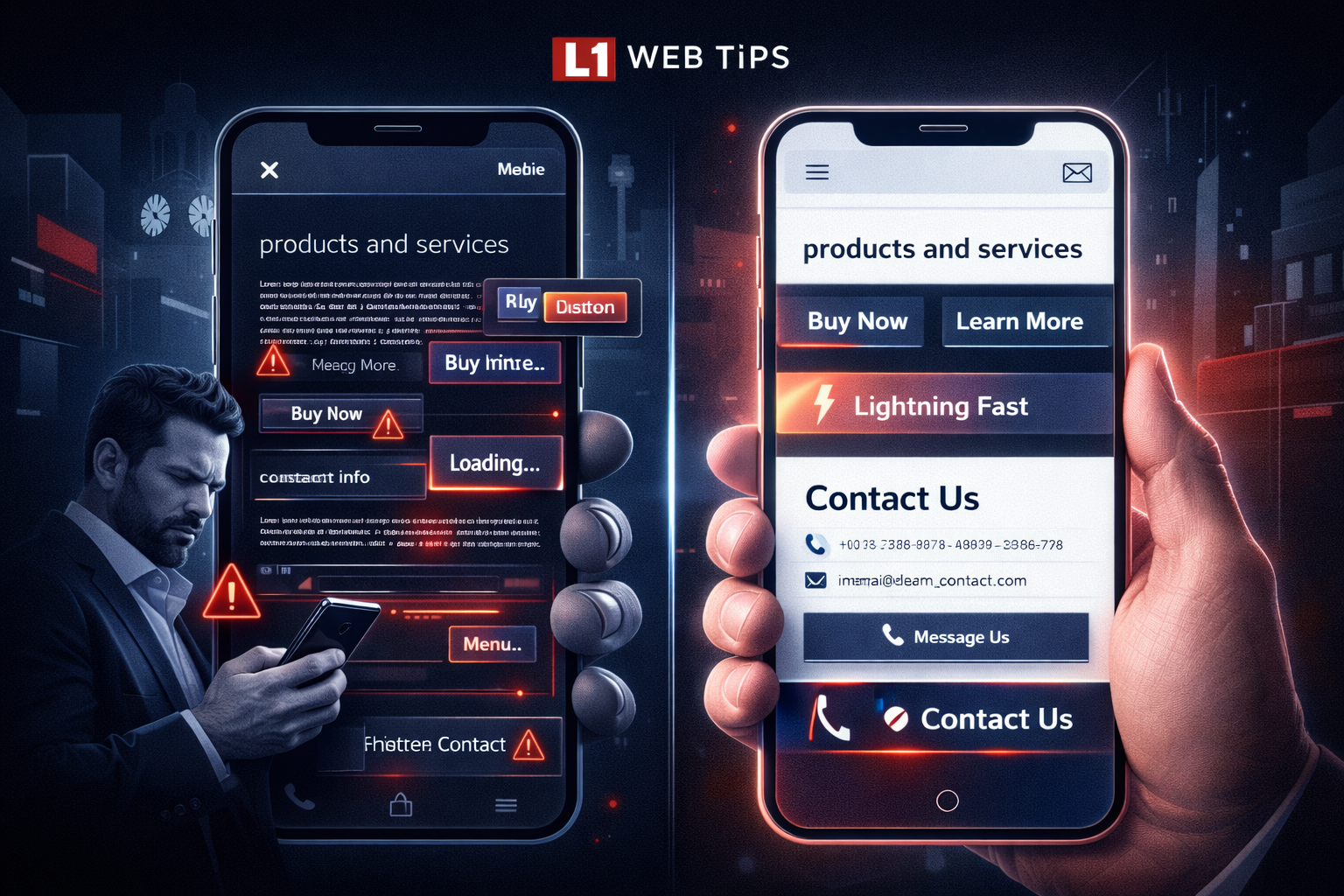
Many mobile menus technically function, but still create friction. They are cluttered, vague, overstuffed, awkward to tap, or built around what the business owner wants to show rather than what the customer wants to find.
Forms are where good leads go to suffer.
This is one of the most common problems on mobile-friendly websites. The form works. It sends. Nothing is technically broken. But using it feels like filling in paperwork at the end of a very long day.
That is enough to make people give up.
This one catches loads of business owners out.
You test your website on decent Wi-Fi, on a phone that already knows the site, probably in a calm setting, and it feels fine.
Your customer may be on mobile data, in a patchy signal area, on an older device, with a short attention span and zero emotional attachment to your homepage animation.
A mobile website does not need to be painfully slow to lose people. It just needs to be slightly annoying.
This sounds basic. It is basic. It still goes wrong all the time.
People visit local business websites on mobile because they want practical information quickly:
And yet plenty of websites hide this stuff like it is confidential.
This is the big one, because it causes all the others.
Business owners test websites with too much context.
You know your business. You know your services. You know where the buttons are. You know what the headings mean. You know which page has the important info. You know how the site is supposed to work.
Your customer knows none of that.
Open your website on your phone and ask:
Liverpool business owners do not usually lose mobile enquiries because their website is completely broken. They lose them because it is almost usable.
If your website is supposed to bring in calls, enquiries, bookings, or sales, mobile-friendliness is not a minor design detail. For a huge chunk of your visitors, it is the whole experience.
Get help
We help Liverpool businesses with web design, SEO, and content. Honest work, fixed prices.
More articles
Thinking of starting a business in Liverpool? This guide covers the 12 steps that matter — from testing your idea to getting your first paying customer.
Discover why Astro 6.0 is a game-changer for Liverpool businesses, offering lightning-fast speeds and better security for your local website.
Build a website that actually works. A no-fluff guide to typography, color, visual hierarchy, and mobile-first design for beginners.